On the afternoon of June 28, 2024, the VNU University of Science, Hanoi, was delighted to welcome Prof. Sir David Neil Payne, one of the scientists who contributed to breakthroughs in the fields of optics, photonics, and optical signal transmission (fiber optics), which have opened the era of high-speed signal transmission and internet we have today.
 Assoc. Prof. Dr. Ngac An Bang, Vice Rector (left), in discussion during the reception of Prof. David Neil Payne's visit to the university
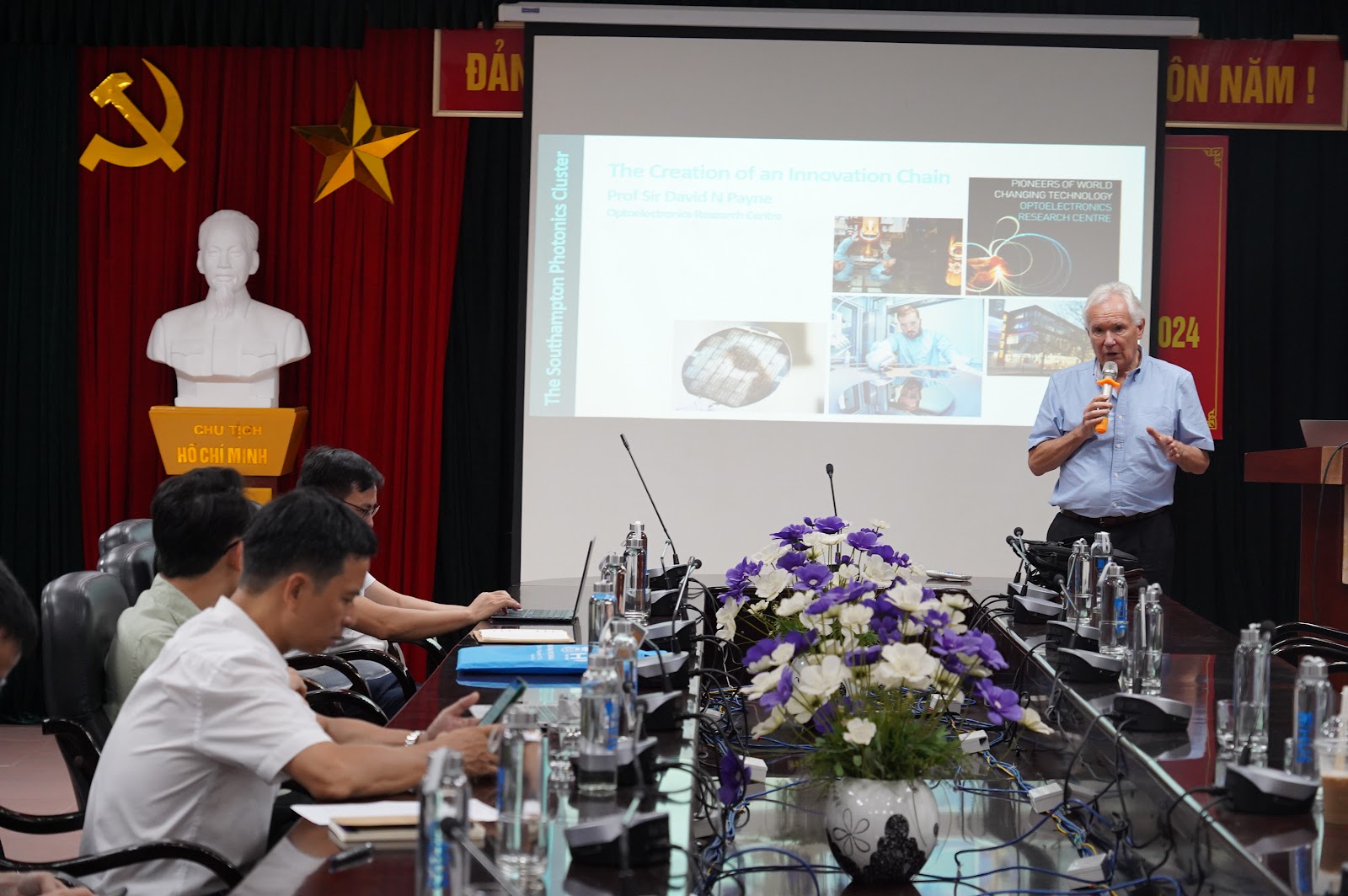 Prof. Payne during the scientific exchange with faculty and students of the Faculty of Physics, VNU University of Science
Prof. Payne, a leading professor at the University of Southampton, is an internationally renowned researcher and pioneer in photonics. He has received numerous prestigious awards, including the Rank Prize in Optoelectronics from the UK, the Tyndall Award from the US (1991), and the Benjamin Franklin Medal in Engineering (1998). He is also a recipient of the Eduard Rhein Foundation Award (Germany). In 2001, Payne was awarded the Mountbatten Medal by the IEE and the Kelvin Medal from eight major engineering institutions for excellence in the application of science to engineering (2004). The Institute of Electrical and Electronics Engineers (IEEE) presented him with the Photonics Award in 2007 for his outstanding contributions to photonics, the first time this award was given outside the US. In 2008, he won the Marconi Prize for his work on developing the optical fiber amplifier. Prof. Sir David Neil Payne was also the recipient of the 2022 VinFuture Grand Prize.
Prof. Payne's research spans various fields of photonics, ranging from telecommunications and optical sensors to nanophotonics and optical materials. His work has led to the development of almost all types of specialty fibers used today and has had a direct impact on telecommunications worldwide, as well as nearly all areas of optical R&D.
His optical fiber technology is one of the greatest scientific successes of the past three decades, forming the backbone of the internet, enabling laser functionalities and environmental sensors, and driving growth for the benefit of all nations.
In 1985, Prof. Payne and his research team discovered the silica fiber laser and the Erbium-Doped Fiber Amplifier (EDFA), a device that fueled the explosive growth of the internet by enabling the transmission and amplification of large amounts of data. EDFA is widely regarded as one of the most significant advancements in modern telecommunications.
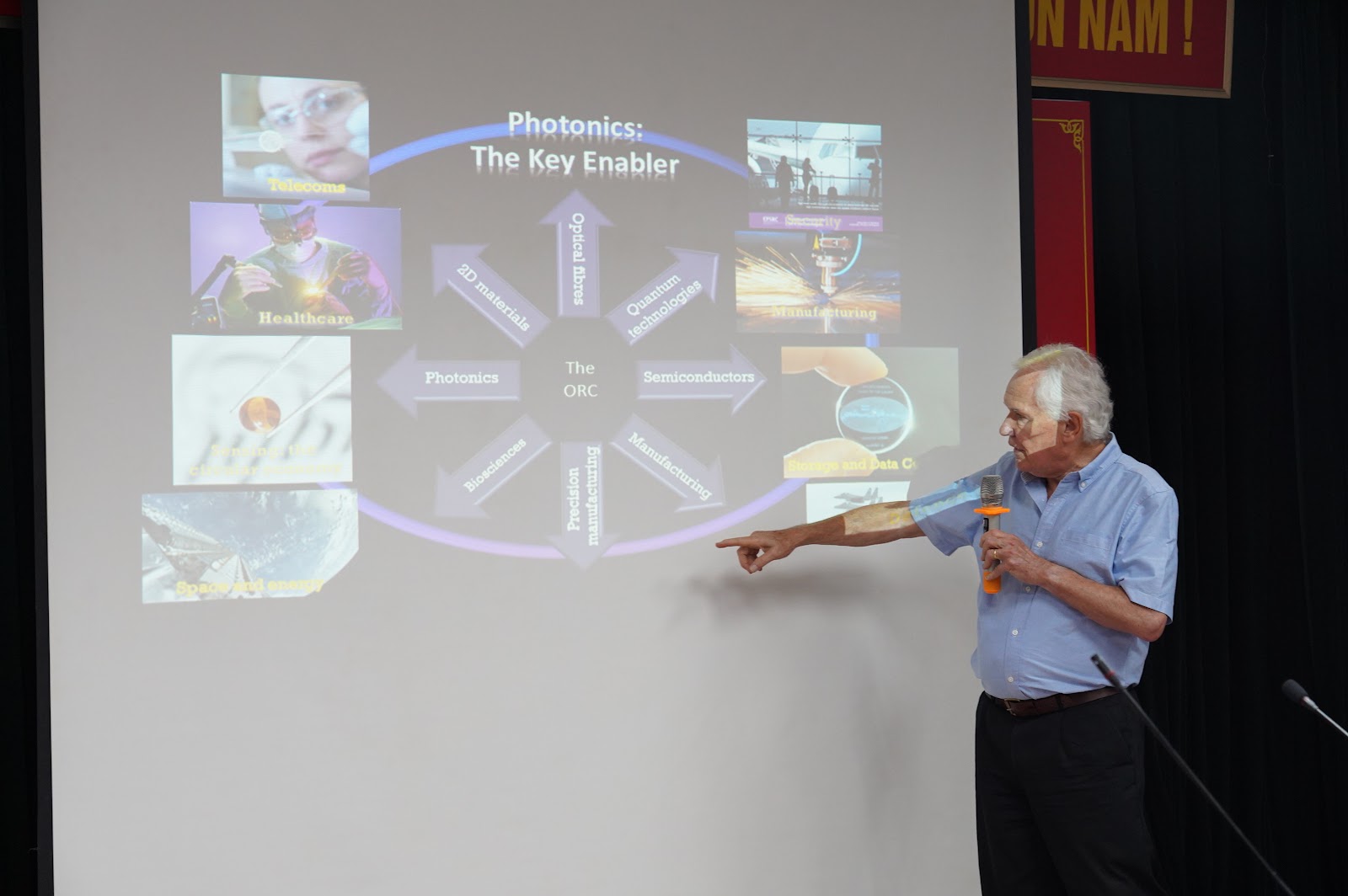 Prof. Payne shares his research related to photonics
In addition to his outstanding research achievements, Prof. Payne is also a leading entrepreneur. He has combined world-class scientific expertise with commercial activities and has been the driving force behind a group of 10 startups in the surrounding area, generating economic benefits and creating jobs for the community.
At the scientific seminar with faculty and students from the Division of Quantum Optics, Faculty of Physics, VNU University of Science, Prof. Payne shared insights about his successful research with his colleagues. In addition, his discussions on the topic of entrepreneurship in science captured the interest of the university's staff and lecturers.
Dr. Nguyen Quoc Hung, Deputy Director of the Center for Nano and Energy, VNU University of Science, shared that as the developer of the RARE technology for producing radiative cooling paint for outdoor surfaces—capable of reflecting up to 98% of solar energy and keeping buildings as cool as if under tree shade—he hopes to establish a spin-off company for this technology. During the discussion, Dr. Nguyen Quoc Hung expressed his desire to receive insights from Prof. Payne on how to approach, promote, and convince users of the necessity of this product.
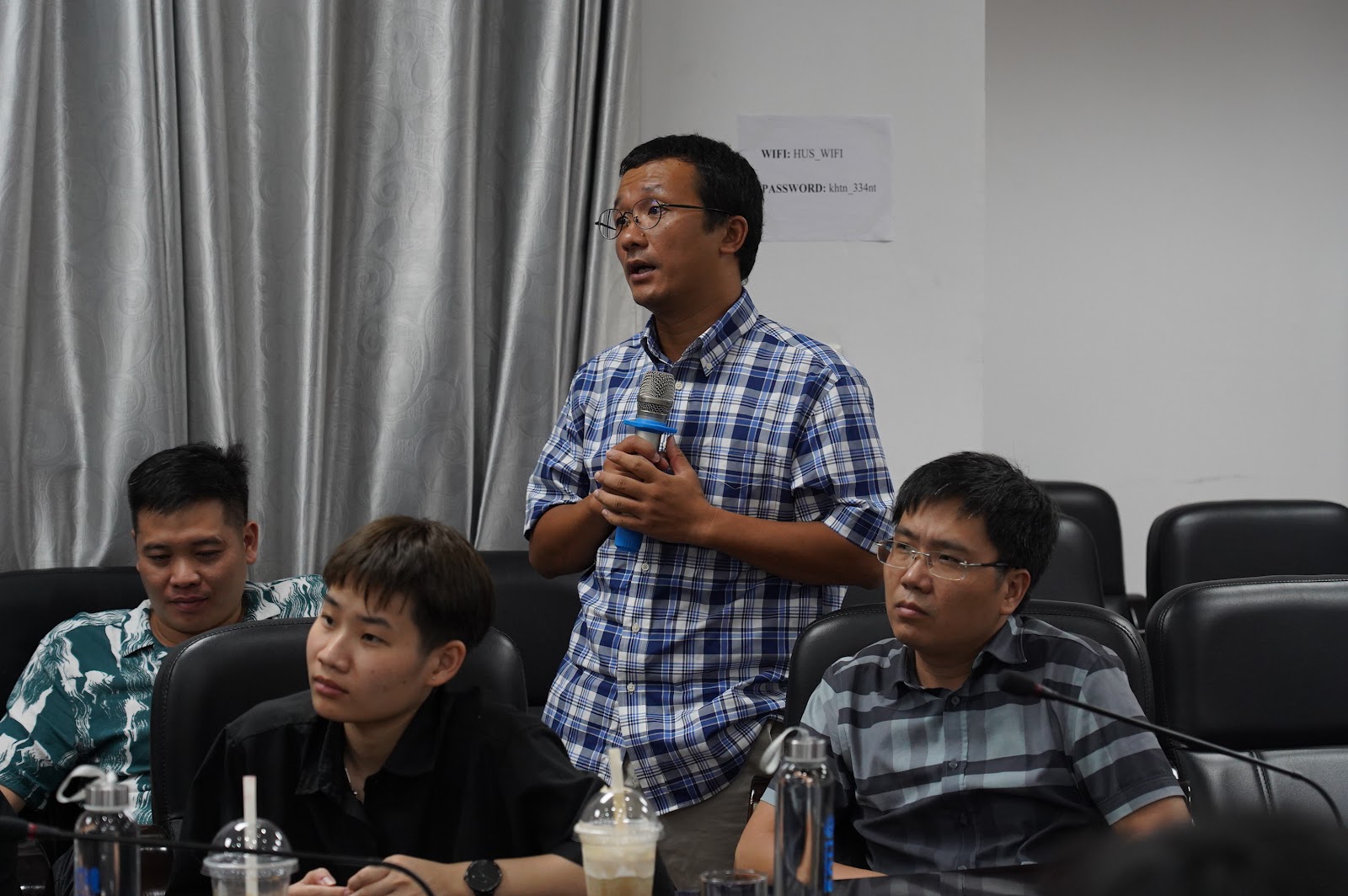 Dr. Nguyen Quoc Hung discusses the establishment of a spin-off company to develop scientific products
Addressing Dr. Nguyen Quoc Hung's concerns, Prof. Payne emphasized that in addition to actively participating in scientific exhibitions and vigorously promoting the product, the involvement of marketing is essential.
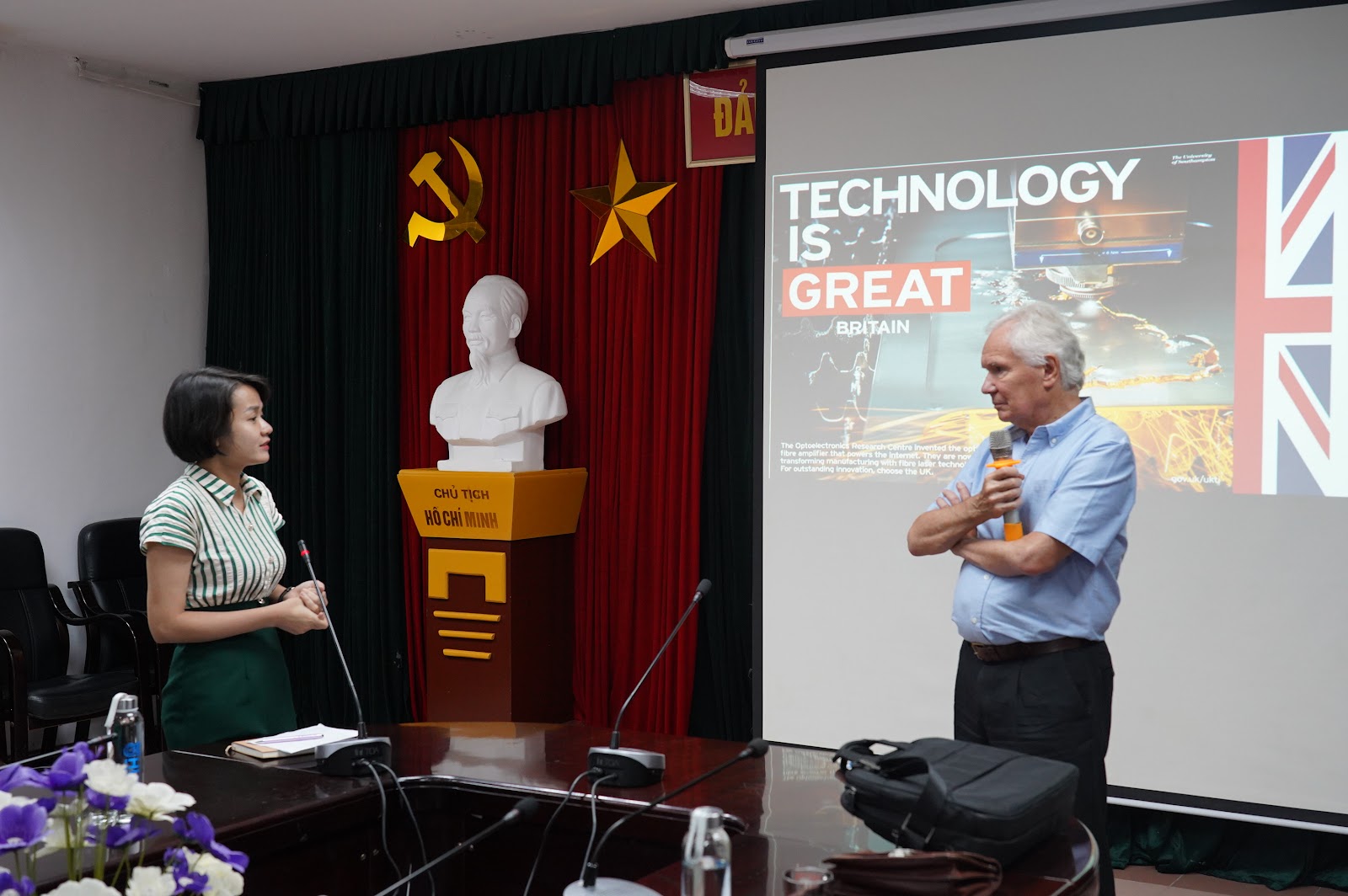 Assoc. Prof. Dr. Mai Hong Hanh and Prof. Payne discuss how to attract businesses to invest in research and commercialize scientific products
In response to the query from Assoc. Prof. Dr. Mai Hong Hanh, Head of the Quantum Optics Division, Faculty of Physics, VNU University of Science, about how to convince businesses and companies to sponsor research and commercialize products, Prof. Payne shared the experience from the University of Southampton. He explained that the university developed the "Photons to Production" strategy to help bring laboratory research technologies to market. This strategy involves collaborating with companies to identify needs and seek appropriate technologies, thereby persuading businesses to commercialize the university's products.
During the meeting and discussions with the leadership of VNU University of Science, Prof. Payne expressed his pride and honor in visiting and engaging with the university's staff and students. He was very impressed with the development history of VNU as a whole and VNU University of Science in particular. According to Prof. Payne, with the decisive actions and strategies the university has implemented and is continuing to pursue, it is certain to become a cradle for nurturing and training many future innovators for society.
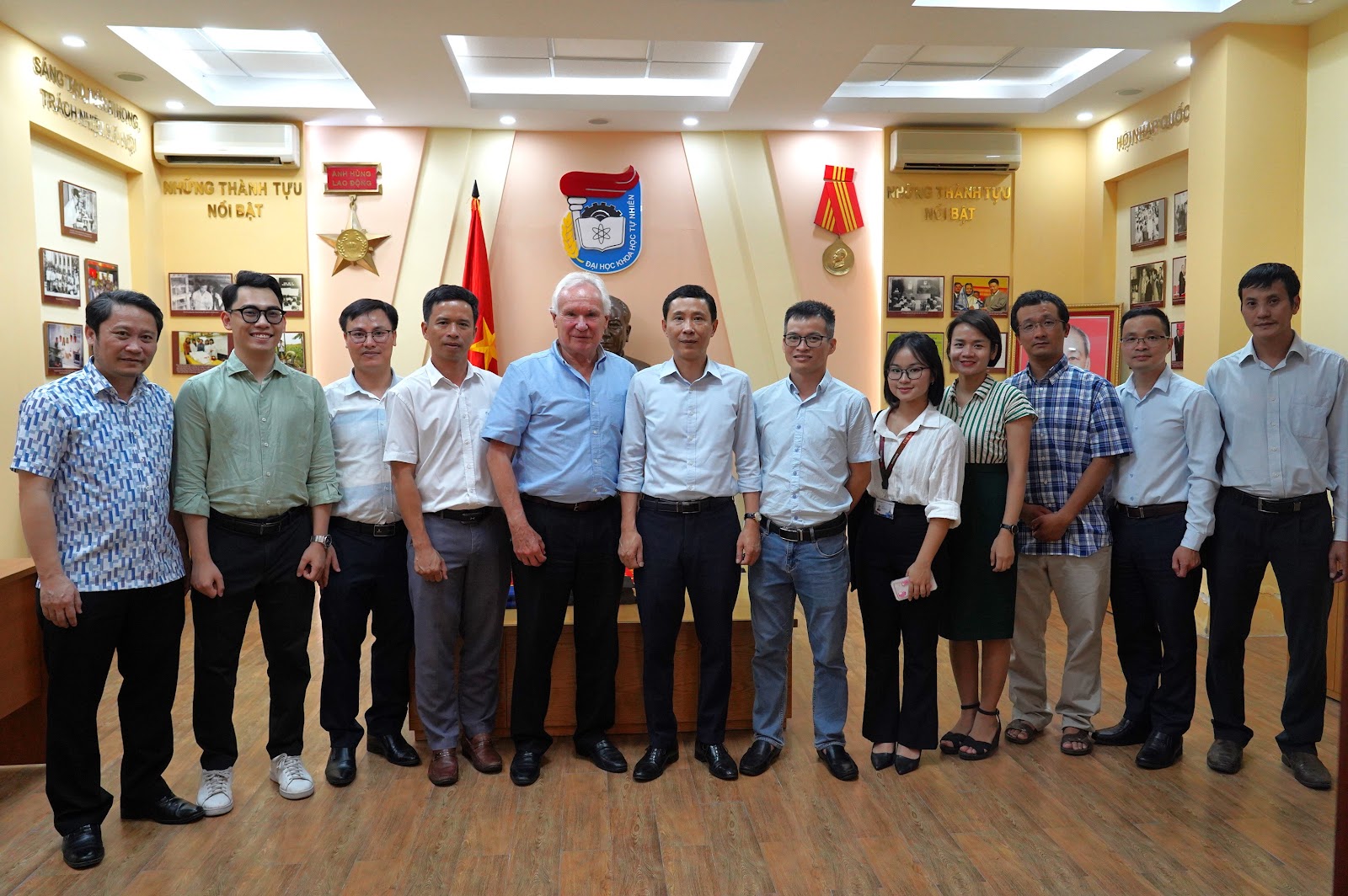 Prof. Payne visits the university’s traditional hall and signs the guestbook